AI vs Human Intelligence: What’s the Difference?
September 2, 2026
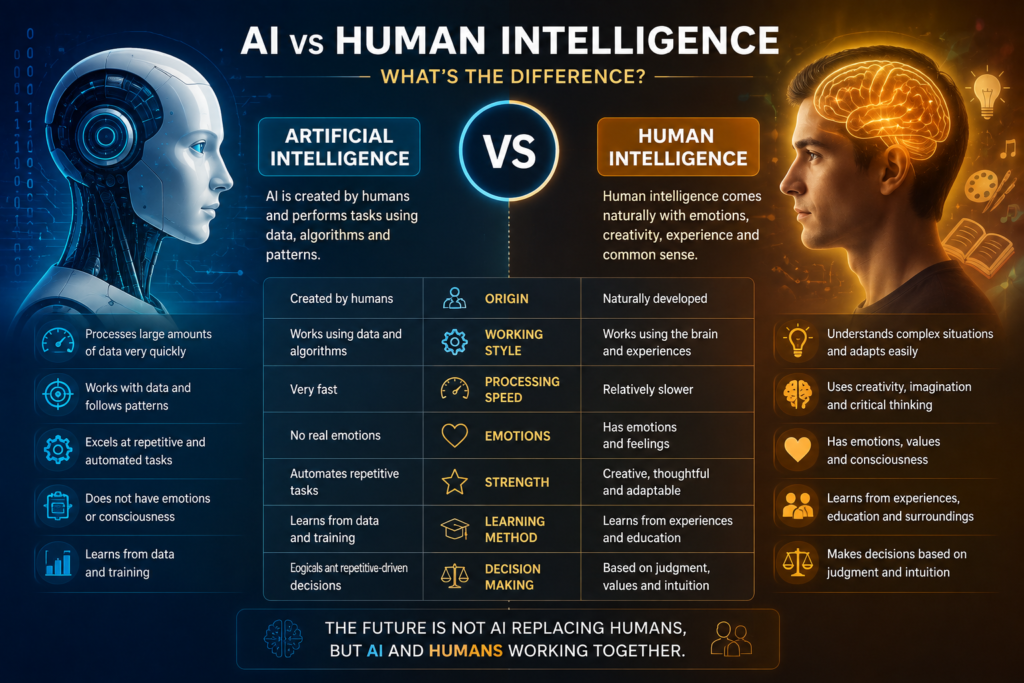
Artificial Intelligence (AI) and human intelligence are both capable of solving problems and making decisions, but they work in very different ways.
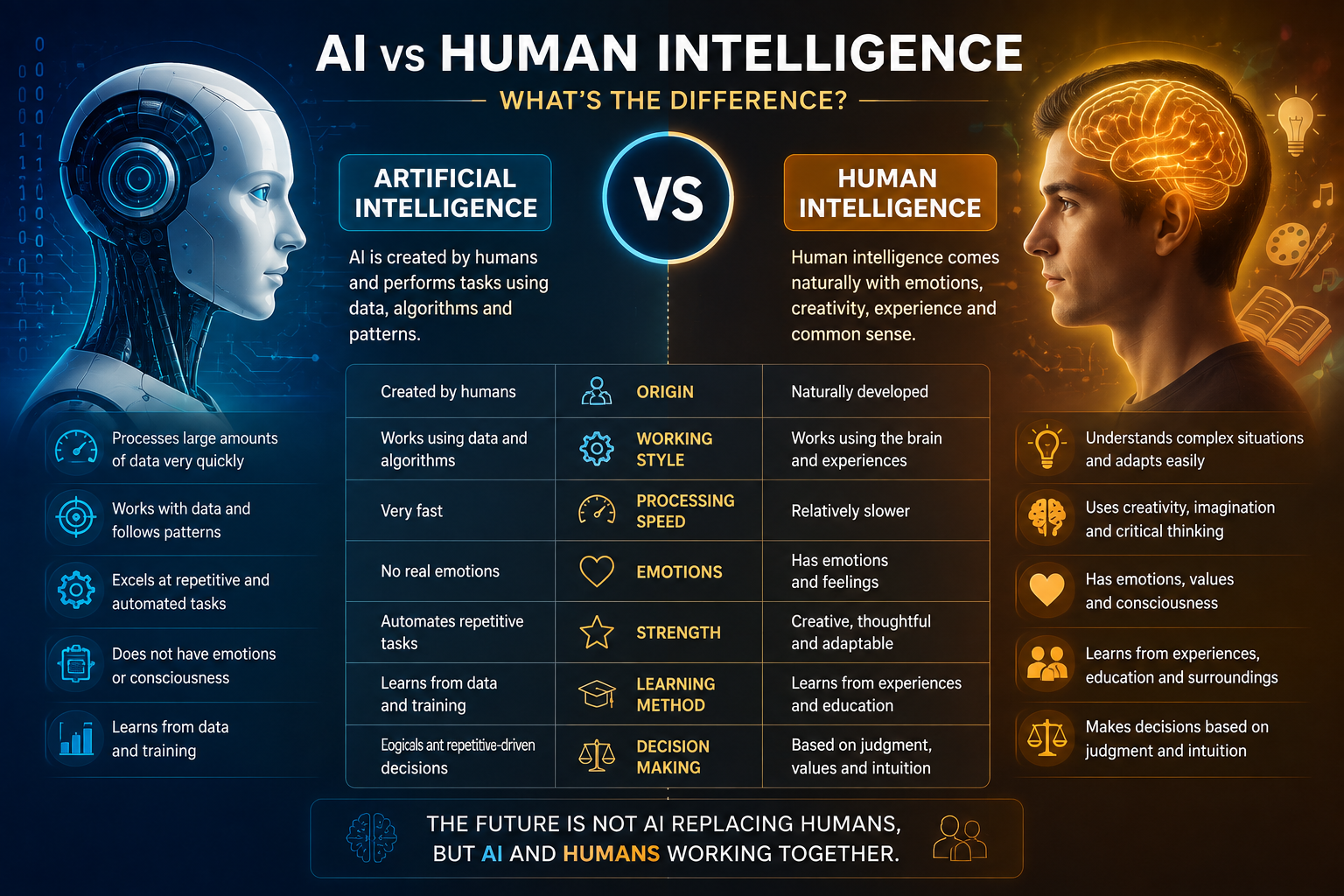
Artificial Intelligence is created by humans and uses data, algorithms, and patterns to perform specific tasks. AI can process large amounts of information quickly, recognize patterns, and automate repetitive work. However, AI does not have real emotions, consciousness, or personal experiences.
Human Intelligence, on the other hand, includes emotions, creativity, common sense, imagination, and the ability to understand complex situations based on life experiences. Humans can adapt to completely new situations and make decisions based on values and feelings.
Main Difference
| Artificial Intelligence | Human Intelligence |
|---|---|
| Created by humans | Naturally developed |
| Works using data and algorithms | Works using the brain and experiences |
| Processes information very quickly | Processing speed is comparatively slower |
| Does not have real emotions | Has emotions and feelings |
| Can automate repetitive tasks | Can think creatively and emotionally |
| Learns from data and training | Learns from experiences and education |
Conclusion
AI is powerful for speed, data analysis, and automation, while human intelligence is stronger in creativity, emotions, judgment, and understanding. The future is likely to involve AI and humans working together, combining the strengths of both.