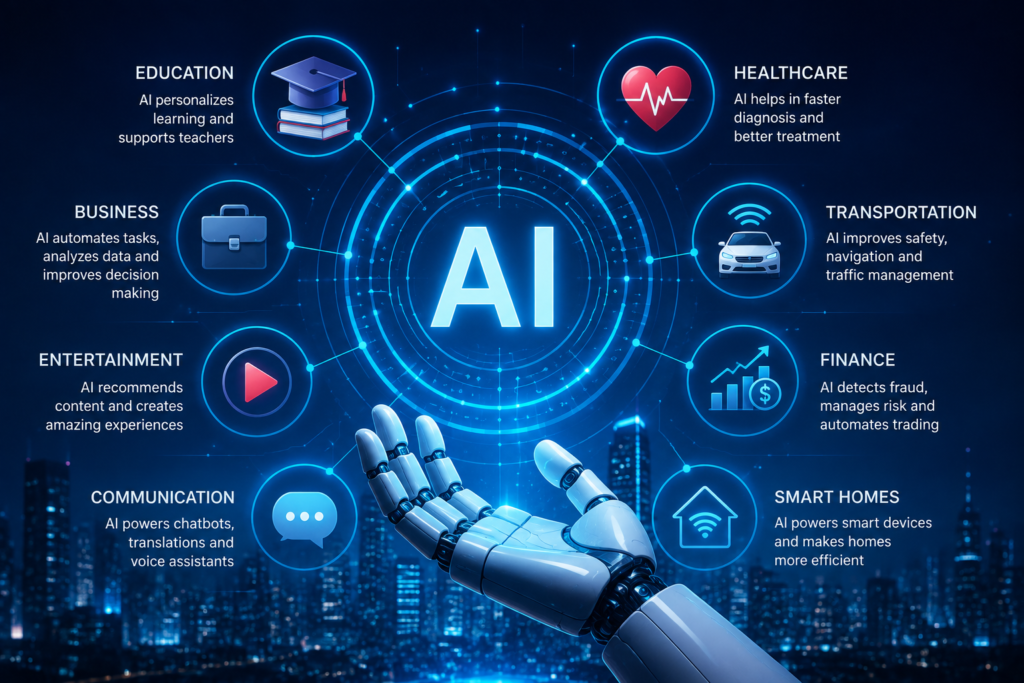
How AI Is Changing Education
August 31, 2026
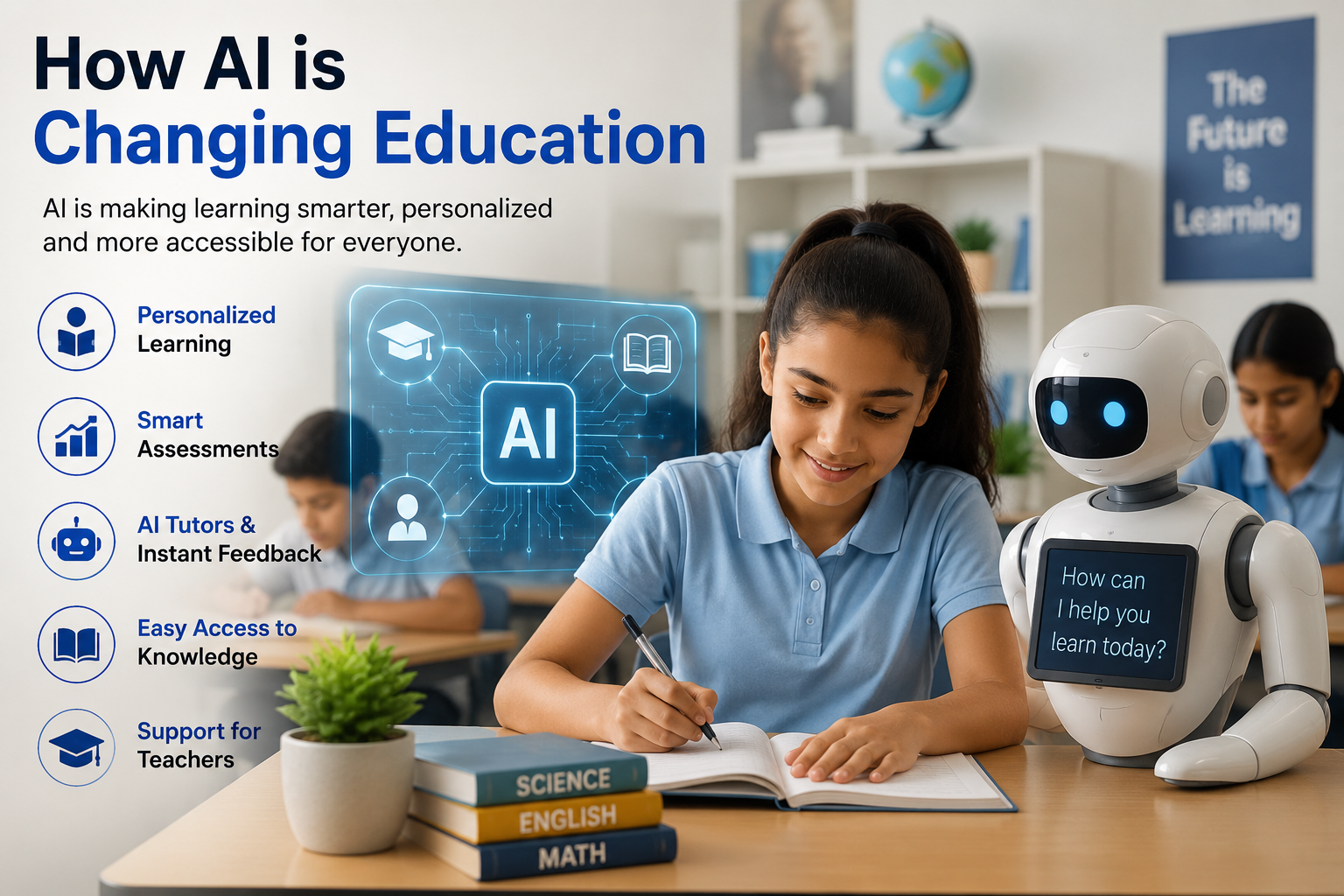
Artificial Intelligence is transforming education by making learning more personalized, interactive, and accessible. AI-powered tools can help students understand difficult topics, practice lessons, generate ideas, and receive instant feedback. Teachers can use AI to create worksheets, lesson plans, quizzes, and educational materials more efficiently. AI can also identify areas where students need additional support and help provide learning at their own pace.
Overall, AI is becoming a powerful support tool for both teachers and students, while human guidance, creativity, and critical thinking remain essential.
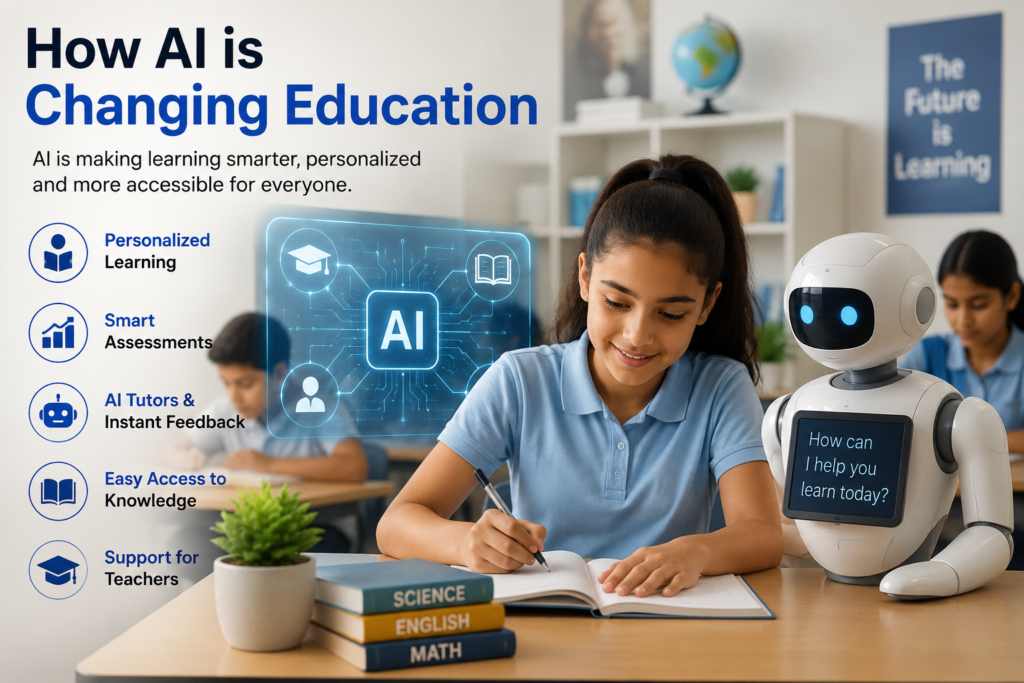
Lets look more about how AI is Changing the Education.
How AI Is Changing Education
Artificial Intelligence is transforming education by making learning smarter, faster, and more personalized. It is helping both students and teachers by providing new ways to learn, practice, create, and manage educational tasks.
1. Personalized Learning
AI can understand a student’s learning level and provide lessons or questions suited to their abilities. Students can learn at their own pace instead of following exactly the same learning path.
2. AI Tutors
AI-powered tutors can explain difficult topics, answer questions, provide examples, and help students practice subjects such as Math, Science, and English.
3. Faster Feedback
AI can analyze assignments, quizzes, and answers and provide instant feedback. This helps students understand their mistakes and improve more quickly.
4. Helping Teachers
Teachers can use AI to create lesson plans, worksheets, quizzes, presentations, and educational activities. This can reduce repetitive work and give teachers more time to focus on students.
5. Interactive Learning
AI can make education more engaging through chatbots, simulations, virtual assistants, educational games, and AI-generated videos. These tools can make difficult concepts easier to understand.
6. Language Learning
AI can help students learn new languages by providing translation, pronunciation practice, grammar correction, and conversation exercises.
7. Accessibility
AI can make educational content more accessible through features such as text-to-speech, speech-to-text, translation, and personalized assistance, helping more students participate in learning.
8. Smarter Assessments
AI can help analyze test results and identify areas where students are struggling. Teachers can then provide additional practice and support where it is needed.
9. Better Educational Content
AI can help educators create different types of learning materials, including summaries, examples, practice questions, images, and presentations, making lessons more flexible.
10. Preparing Students for the Future
As AI becomes increasingly important in workplaces, students need to understand how to use AI responsibly, think critically, check information, and combine technology with creativity.
Conclusion
AI is not meant to replace teachers. Instead, it can act as a powerful assistant that supports teachers and students. When used responsibly, AI can make education more personalized, interactive, accessible, and efficient while keeping human teachers at the center of learning.